
Choosing a reliable China lithium battery pack supplier requires more than comparing prices on a product page. The right partner must understand your application, operating environment, and safety requirements. A pack for an electric scooter faces different demands from one used in medical equipment or industrial storage. Voltage, capacity, discharge rate, cell chemistry, enclosure design, and battery management system should match the real load. Small details matter.
Look for evidence, not confident promises. Ask for cell brand records, production samples, capacity test results, and batch traceability. Review certifications and test reports relevant to your market, such as IEC 62133, UN 38.3, or other applicable standards. Check whether the supplier can explain thermal protection, overcharge control, short-circuit response, and end-of-line testing in clear language. A factory visit may reveal automated welding, clean assembly areas, and calibrated equipment. Still, appearances can mislead.
Request a sample before signing a large order. Test it under realistic conditions, including low-temperature use, repeated charging, vibration, and extended discharge. Discuss warranty terms, replacement procedures, communication speed, and after-sales support. An experienced supplier should provide practical answers, not only polished brochures. Yet no supplier is perfect, and even a strong factory may make mistakes. Ask how failures are recorded, investigated, and corrected. That answer often shows more professionalism than a low quotation. Choose a partner that can prove consistent quality, communicate honestly, and improve when your requirements change.
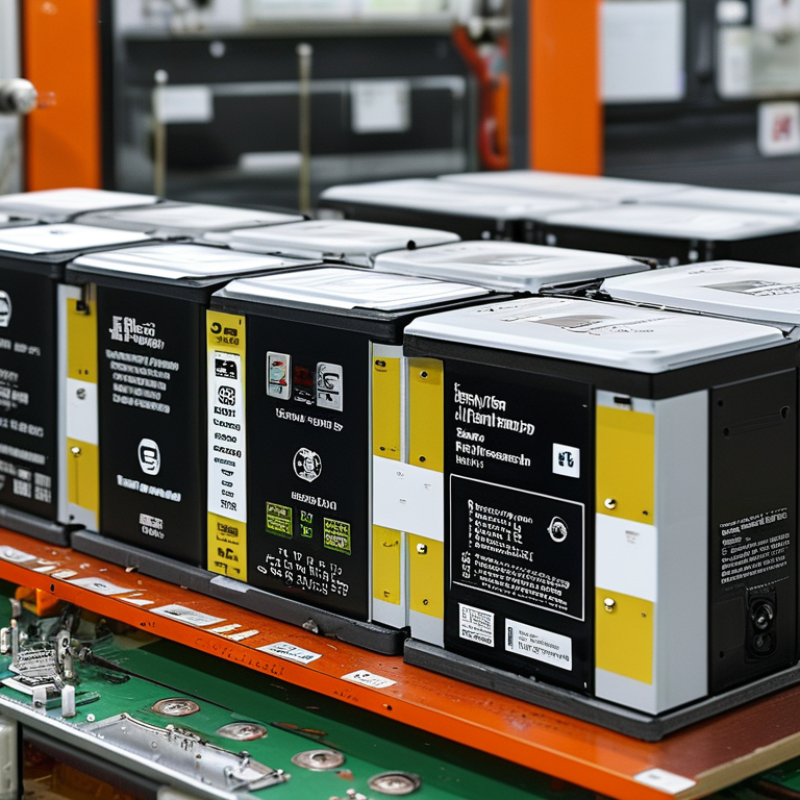
How to Choose a Top China lithium battery pack Supplier?
Choosing a China lithium battery pack supplier starts with a precise requirement sheet. Chemistry comes first. LFP offers strong thermal stability and long cycle life. NMC usually provides higher energy density. The IEA’s Global EV Outlook 2024 reports that global electric-car battery demand exceeded 750 GWh in 2023. This rapid growth makes chemistry selection more important, not less. Specify nominal voltage, charging voltage, discharge limits, capacity, cell format, and BMS protections. Avoid vague claims such as “high performance.” Ask for measured data.
Capacity should reflect usable energy, not the label alone. A 48 V, 100 Ah pack stores about 4.8 kWh nominally. Usable energy decreases with temperature, cutoff voltage, and aging. Define the duty cycle clearly. Include load current, operating hours, rest periods, daily cycles, and ambient temperature. A warehouse vehicle may need short, high-current bursts. A solar storage pack may require slower, deeper cycling. Different problem. BloombergNEF’s 2023 Lithium-Ion Battery Price Survey reported an average pack price of 139 dollars per kWh, down 14 percent year on year. Price comparisons still fail without matching specifications.
Request prototype testing under your real load profile. Check voltage sag, surface temperature, recharge time, and capacity after repeated cycles. Review cell traceability, test records, protection settings, and transport documentation. No spreadsheet is perfect. Labels mislead. Test it. A supplier that accepts independent validation is usually more reliable than one offering only attractive quotations.
A reliable China lithium battery pack supplier should be judged against a transparent cost benchmark. BloombergNEF reported an average global battery pack price of $139/kWh in 2023, down 14% from 2022. This figure is useful, but it is not a universal quotation.
For a 100 kWh pack, the benchmark equals roughly $13,900 before shipping, duties, testing, and integration. A supplier offering $105/kWh may appear attractive. Check the details. Does the price include the battery management system, enclosure, cooling plates, connectors, and end-of-line testing? Different cell chemistries and production volumes can change the comparison significantly. A low factory price can become expensive after warranty reserves and logistics.
The International Energy Agency linked the 2023 decline to falling material costs and strong manufacturing capacity, especially across Asia. Ask suppliers to explain their pricing assumptions in writing. Request recent capacity-test records, cycle-life data, and traceability documents. Reports aligned with UN 38.3 and IEC 62619 can strengthen technical confidence, but paperwork alone proves little. Inspect sample packs and compare actual weight, busbar design, thermal sensors, and BMS response. I have seen quotations omit software support and replacement procedures. That omission matters. A serious supplier should provide a clear warranty, measurable capacity retention, and defined failure handling. The $139/kWh benchmark is a starting line, not a purchasing verdict.
Choosing a China lithium battery pack supplier starts with chemistry, not price. The IEA reported global electric vehicle battery demand reached about 750 GWh in 2023. That scale makes technical matching essential.
LFP cells suit buses, storage cabinets, and delivery fleets needing long cycle life and strong thermal stability. NMC cells offer higher energy density when vehicle weight and driving range matter.
The trade-off is clear: NMC depends more heavily on nickel and cobalt supply, while LFP usually requires larger packs for the same range. BloombergNEF’s 2023 Battery Price Survey placed the average lithium-ion pack price at 139 US dollars per kWh. A low quotation still deserves suspicion.
Ask suppliers for cell-level test data, batch traceability, temperature records, and capacity-retention results. Review protection settings, balancing accuracy, ingress protection, and transport documentation. UN 38.3 testing and relevant IEC or UL evaluations should be verified through current reports, not screenshots. Request pilot samples before signing volume contracts. Test them at low temperatures and after repeated fast charging.
Small details matter. A loose busbar can create heat. A weak BMS setting can shorten service life. No scorecard is perfect.
Some suppliers present excellent laboratory results but provide limited field evidence. Compare warranty terms with actual operating conditions, including ambient temperature, charging rate, and daily depth of discharge. The best supplier is not always the cheapest. It is the one whose chemistry, data, and manufacturing controls fit the intended duty.
A reliable supplier should provide clear evidence, not only attractive specifications. Request current UN 38.3 test reports for transport safety and confirm they match the exact battery model. Check IEC 62619 records for industrial lithium battery safety, including protection against overcharge, overheating, and short circuits. For electric vehicle applications, verify whether UL 2580 applies to the pack and intended market.
Documents need careful checking. A report with the wrong cell configuration is not useful. Confirm the manufacturer, model number, test sample, issue date, and laboratory details. Ask whether changes in cells, battery management systems, or enclosure design trigger retesting. Some suppliers share certificates quickly, but their scope may be unclear. That is a warning sign.
ISO 9001 shows that the supplier operates a quality management system. It does not automatically prove product safety. During a factory review, inspect incoming cell testing, welding records, BMS programming, and end-of-line capacity checks. Serial numbers should connect each pack to production data. Ask for corrective-action records after failures. Good suppliers answer precisely, even when a process needs improvement. I would also request a sample audit before placing a large order, because paperwork can look stronger than daily production.
How to Choose a Top China Lithium Battery Pack Supplier?
A serious supplier should provide production samples for an independent audit. Inspect welds, insulation, busbars, labels, and protection circuits. Do not judge quality from polished photographs. Request samples from normal production, not specially prepared units. The IEA’s Global EV Outlook 2024 reported more than 750 GWh of global EV battery demand in 2023. Scale matters, but process control matters more. Ask for cell lot numbers, incoming inspection records, and assembly dates. Traceability should connect each pack to cells, operators, test equipment, and shipment records.
Cycle-life claims need test conditions. Request charge voltage, discharge current, temperature, depth of discharge, and capacity-retention limits. A claim of 4,000 cycles means little without this information. BloombergNEF’s 2023 Battery Price Survey reported average lithium-ion pack prices of 139 dollars per kWh. Lower cost can help, but it may also reflect compromises in cells, testing, or service. Review raw test curves, not only a final certificate. Short tests can look excellent. Long-term field behavior is harder.
Warranty language should define capacity retention, repair response, exclusions, and evidence requirements. Ask for anonymized failure statistics and recent 8D corrective-action records. A useful 8D report identifies the failed mechanism, containment action, root cause, verification data, and prevention measure. Vague phrases such as “operator error” deserve deeper questions. I would also check whether corrective actions changed tooling or inspection frequency. Suppliers sometimes present perfect records. That is not always reassuring. A mature factory can show problems, lessons, and measurable improvements.
| Anonymous Supplier | Sample Audit | Cycle-Life Evidence | Traceability Coverage | Warranty Terms | 8D Corrective-Action Records | Safety Documentation | Record Score | Procurement Risk |
|---|---|---|---|---|---|---|---|---|
| Supplier A | Verified On-site process audit completed; incoming, in-process, and final inspection records sampled. | Third-party report available for 3.2 V lithium iron phosphate cells; 80% capacity retention after 3,000 cycles at 25°C under defined test conditions. | Cell batch, BMS lot, operator, torque value, and end-of-line test data linked to pack serial number. | 36 months or 2,000 equivalent full cycles, subject to agreed operating limits and capacity threshold. | Three closed 8D records reviewed; containment, root-cause analysis, corrective action, and effectiveness checks included. | UN 38.3, IEC 62619, and transport test documentation available for the audited pack configuration. | 94 / 100 | Low |
| Supplier B | Verified Remote audit completed with production photographs, quality records, and live video verification. | Internal report indicates 80% capacity retention after 2,500 cycles at 25°C; raw test files were available for review. | Pack serial number linked to cell batch and final inspection results; operator-level traceability partially available. | 24 months or 1,500 equivalent full cycles, with exclusions for over-temperature, over-discharge, and unauthorized modification. | Two 8D reports reviewed; corrective actions documented, but effectiveness verification was limited to one case. | UN 38.3 and IEC 62619 documents available; configuration matching should be confirmed before shipment. | 86 / 100 | Low–Medium |
| Supplier C | Partial Pre-shipment sample inspection completed; no independent factory process audit performed. | Supplier summary claims 2,000+ cycles to 80% capacity; detailed test conditions and raw data were not fully provided. | Cell batch and pack serial numbers recorded; BMS firmware version was not consistently included. | 24 months from shipment date; cycle-life commitment is not stated in the warranty document. | One 8D report provided; root cause was identified, but preventive-action evidence was incomplete. | UN 38.3 available; product-specific IEC 62619 evidence pending review. | 72 / 100 | Medium |
| Supplier D | Verified On-site audit completed; calibrated test equipment and final assembly controls were sampled. | Independent laboratory data shows 80% capacity retention after 3,500 cycles at 25°C; test current, cut-off voltage, and rest intervals were documented. | Full traceability from cell incoming inspection through welding, BMS programming, final test, and shipment release. | 36 months or 3,000 equivalent full cycles, with defined storage, temperature, and depth-of-discharge conditions. | Five closed 8D records reviewed; recurring-failure analysis and effectiveness checks were documented. | UN 38.3, IEC 62619, EMC test records, and protection-function verification available for the reviewed model. | 97 / 100 | Low |
| Supplier E | Partial Document review completed; production-line audit and sample retention process were not verified. | Marketing specification lists 1,500–2,000 cycles to 80% capacity; no third-party report or raw test dataset was submitted. | Shipment-level records available; cell-level batch traceability and BMS firmware history were unavailable. | 18 months from shipment; warranty claim response time and replacement process were not clearly defined. | No completed 8D record was provided; supplier uses a general corrective-action form. | UN 38.3 document provided; additional safety and abuse-test evidence required before approval. | 58 / 100 | High |
Evaluation basis: verify the exact battery chemistry, cell format, nominal voltage, capacity, BMS firmware, test temperature, charge/discharge rate, depth of discharge, and applicable certification scope before placing a purchase order. Cycle-life results are valid only under the stated test conditions.
(Your form has been submitted.)
We'll be in touch soon! Until then, take a look around — you never know what you'll find!