How to Choose the Right Food Flavoring Supplier?

Choosing the right food flavoring supplier affects taste, safety, consistency, and commercial performance. It is not merely a purchasing decision. A supplier’s aroma may smell impressive in a sample vial, yet perform poorly after baking, freezing, or storage.

Market evidence supports careful evaluation. Grand View Research’s 2024 food flavor market analysis identifies continued growth, driven by processed foods, beverages, and demand for natural flavor profiles. This growth increases supplier choice, but it also increases inconsistency between claims and actual performance. Innova Market Insights’ 2024 consumer trend reporting highlights stronger interest in recognizable ingredients and transparent product information. Buyers should therefore examine more than flavor intensity. They should verify origin, composition, allergen controls, and labeling support.

Ask for technical documentation before approving a supplier. A reliable partner should provide a certificate of analysis, specification sheet, allergen statement, batch traceability, and stability guidance. The International Organization for Standardization’s ISO 22000 framework also reinforces the importance of documented food safety management. Practical testing matters too. Add the flavor to your real formulation, not only water. Check its performance after heating, refrigeration, and several weeks of storage. Record dosage, sensory changes, color, and aftertaste.

Small details reveal professionalism.

A supplier that answers quickly but avoids clear documentation may create expensive problems later. I have seen teams focus heavily on price, then overlook minimum order quantities, replacement lead times, or regional compliance requirements. That approach deserves reflection. The best food flavoring supplier combines sensory expertise, transparent communication, dependable quality systems, and evidence that supports every claim.
How to Choose the Right Food Flavoring Supplier?

Define Your Flavoring Needs and Product Requirements

Choosing a food flavoring supplier starts with a precise product brief. The global food flavors market was valued at approximately USD 19.2 billion in 2023, according to Grand View Research. This growth increases supplier choice, but it also increases evaluation risk.

Define the flavor profile first. Describe sweetness, acidity, aroma intensity, aftertaste, and serving temperature. Then specify the product matrix, such as beverage, bakery filling, sauce, or dairy alternative. Ask how the flavor performs under heat, low pH, freezing, and prolonged storage. A flavor that works in a laboratory sample may fade after three months.

Be specific about dosage, carrier materials, allergen controls, and labeling expectations. Codex Alimentarius standards and local food regulations should guide documentation requirements. Request a current specification sheet, certificate of analysis, allergen statement, safety data, and stability information. The 2024 Innova Market Insights consumer trends report highlights continued demand for natural-positioned and health-oriented products, but “natural” requirements vary by market. Do not accept vague claims.

Test more than one batch. Small differences can change the finished product. This is where teams often underestimate risk. Compare samples in the real recipe, not only in water. Review sensory results, cost per serving, minimum order quantity, and supply continuity. A lower unit price may become expensive after reformulation, delayed delivery, or unexpected label changes. A written scorecard makes supplier decisions more reliable.

How to Choose the Right Food Flavoring Supplier?

Define Your Flavoring Needs and Product Requirements

This 100-point evaluation framework helps translate product requirements into supplier-selection priorities. Regulatory compliance and sensory fit should be confirmed first, followed by application stability, technical documentation, supply continuity, and cost-in-use.

Assess Supplier Expertise, Certifications, and Regulatory Compliance

Choosing a food flavoring supplier requires more than tasting samples. Supplier expertise should cover formulation, stability, allergen control, and regional regulations. Ask how the team handles heat, acidity, storage, and interactions with packaging. A technically attractive flavor can fail after three months on a warm warehouse shelf.

Certifications provide useful evidence, but they are not the whole answer. Look for a recognized food safety system, such as ISO 22000 or a GFSI-benchmarked standard, supported by current audit records. Review certificates carefully. Check their scope, production site, expiry date, and nonconformities. The WHO estimates that contaminated food causes about 600 million illnesses annually worldwide, with 420,000 deaths. That figure makes weak documentation difficult to excuse. Request certificates of analysis, allergen statements, country-specific compliance documents, and a traceability procedure. Ask for a mock-recall result, not only a polished policy.

Regulatory competence should be visible in daily work. The supplier must confirm permitted ingredients, usage limits, labeling requirements, and change-notification procedures for each target market. Codex food-additive standards can offer a useful reference, but local rules still decide commercial acceptance. I would also test communication during a minor change, such as a revised carrier or processing site. Delays reveal more than presentations. A certificate can be genuine and still be insufficient. That is the uncomfortable part. Supplier assessment needs evidence, technical questions, and occasional independent verification.

Evaluate Flavor Quality, Consistency, and Customization Options

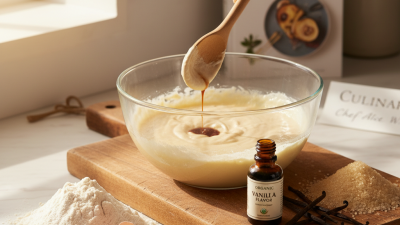
Choosing a food flavoring supplier requires more than tasting one attractive sample. Flavor quality should remain clear after baking, freezing, mixing, or storage. Ask for samples in your actual product base, not only in water. A vanilla note may taste smooth in a drink but become weak in a high-fat filling. Consistency matters. Request batch records, sensory specifications, and certificates of analysis. Reliable suppliers explain acceptable variation instead of promising identical results without evidence.

Evaluate the supplier’s technical experience through practical testing. Can their specialists adjust sweetness, acidity, aroma strength, or heat stability? Do they understand your processing temperature and packaging conditions? A professional team should provide usage guidance and explain potential interactions with other ingredients. Taste changes. I once underestimated the effect of pH during development, and the final flavor became noticeably flatter. That mistake showed why application testing matters more than a polished sales sample.

Customization should include more than changing the flavor name. Discuss natural or synthetic composition, allergen controls, dietary requirements, concentration, and labeling documentation. Ask whether small pilot quantities are available before committing to large production volumes. A dependable supplier keeps development notes and responds clearly when revisions are needed. Some suppliers may need several rounds to reach the right profile, which is normal. Ask for evidence. Compare samples through blind tasting, shelf-life checks, and repeat batches. A supplier who welcomes critical feedback is often more useful than one who claims perfection.

Compare Production Capacity, Pricing, Packaging, and Delivery

How to Choose the Right Food Flavoring Supplier?
Compare Production Capacity, Pricing, Packaging, and Delivery

Choosing a food flavoring supplier begins with evidence, not a polished sales presentation. Ask for monthly capacity, current utilization, lead times, and backup production arrangements. Request samples from the same production line used for regular orders. Small trial orders reveal consistency. A supplier making ten tons monthly may struggle with a sudden fifty-ton request. Check whether scaling changes flavor strength, color, or processing performance. A qualified food technologist can review these risks with you.

Compare pricing on an equal basis. Confirm the flavor concentration, minimum order quantity, testing charges, and payment terms. A low price can mislead when the product requires higher usage. Packaging also affects real cost. Review container size, food-contact suitability, sealing quality, labeling, and storage instructions. I prefer packaging that is easy to inspect and reseal. It reduces handling mistakes, though it may cost slightly more.

Delivery deserves the same attention as production. Request a written schedule covering sample approval, manufacturing, quality release, and transport. Ask how temperature, moisture, and light will be controlled during shipping. Keep a record of promised and actual delivery dates. My own comparison sheets are never perfect, because demand changes unexpectedly. That is why I test communication before signing a long-term agreement. Slow replies during sampling may become serious delays during a busy season. Reliable suppliers provide traceable documents, clear batch identification, and prompt explanations when something changes.

How to Choose the Right Food Flavoring Supplier? Compare Production Capacity, Pricing, Packaging, and Delivery
Evaluation Dimension Supplier Profile 1
Large-Scale Manufacturer
Supplier Profile 2
Mid-Size Specialist
Supplier Profile 3
Flexible Custom Producer
Supplier Profile 4
Regional Stock Supplier
Recommended Buyer Type High-volume food and beverage manufacturers Established brands requiring consistent flavor systems Product developers and customers needing custom formulas Small and medium-sized buyers needing short lead times
Typical Monthly Production Capacity 500–2,000 metric tons 100–500 metric tons 20–150 metric tons 10–80 metric tons
Typical Minimum Order Quantity 500–1,000 kg per flavor 100–500 kg per flavor 25–100 kg per flavor 10–50 kg per flavor from available stock
Indicative Price Range
Standard liquid or water-soluble flavors
US$4–12/kg US$6–18/kg US$10–35/kg US$8–25/kg
Custom Formula Development Available; usually best for large annual volumes Available; balanced technical support and volume flexibility Strong capability; suitable for complex briefs and rapid iteration Limited; mainly standard or lightly modified formulas
Standard Sample Lead Time 5–10 business days 5–12 business days 3–10 business days 1–5 business days when stock is available
Normal Production Lead Time 3–6 weeks 2–5 weeks 2–4 weeks 1–3 weeks
Packaging Options 25 kg pails, 200 kg drums, 1,000 kg IBC totes 1 kg samples, 25 kg pails, 200 kg drums 0.5–5 kg development packs, 25 kg pails, 200 kg drums 0.5–25 kg containers; limited bulk packaging
Packaging Suitability Best for automated production and bulk handling Suitable for regular manufacturing and warehouse storage Suitable for pilot batches and frequent formula changes Suitable for small-batch production and urgent replenishment
Expected Shelf Life Typically 12–24 months, depending on formulation and storage Typically 12–24 months, depending on formulation and storage Typically 9–18 months for custom formulations Typically 9–18 months, subject to stock rotation
Storage Requirement Cool, dry, tightly closed; protect from heat and direct light Cool, dry, tightly closed; protect from heat and direct light Usually cool and dry; some natural flavors may need refrigeration Follow product-specific conditions and first-expiry-first-out control
Quality Documentation Usually includes specification sheet, certificate of analysis, allergen statement, and safety documentation Usually includes specification sheet, certificate of analysis, allergen statement, and technical data Usually includes specification sheet, sample approval record, and custom technical documentation Documentation depends on stock item and distribution channel
Food Safety System to Verify HACCP-based system and a recognized GFSI-benchmarked certification where required HACCP-based system and applicable third-party food safety certification HACCP-based controls and documented traceability for custom batches Supplier approval, traceability, storage controls, and current certificates
Best Overall Advantage Lowest unit cost at high volume and strong supply continuity Good balance of price, consistency, and technical support High flexibility for customized products and smaller orders Fast availability and lower commitment for urgent or small purchases
Main Purchasing Risk Higher MOQ, longer scheduling requirements, and less flexibility for small orders Price may increase for low-volume or highly specialized flavors Higher unit price and potentially greater batch-to-batch variability for new formulas Limited capacity, reduced customization, and possible stock shortages
Recommended Selection Priority Choose when annual demand is predictable and production volume is high Choose when quality consistency and commercial flexibility are equally important Choose when formulation support and low initial volume are priorities Choose when delivery speed is more important than the lowest long-term price

The figures above are practical procurement benchmarks for supplier comparison. Final pricing, capacity, packaging, certifications, shelf life, and delivery dates should be confirmed through a written quotation, current product specification, certificate of analysis, and supplier audit.

Test Samples and Confirm Long-Term Supplier Reliability

How to Choose the Right Food Flavoring Supplier?

Test Samples and Confirm Long-Term Supplier Reliability

A sample should be tested in your real product, not only in a supplier’s laboratory. Request enough material for repeated trials and comparison. Test it in your actual recipe, equipment, temperature range, and storage conditions. Record dosage, flavor strength, color, aftertaste, and performance after opening. Small differences can become obvious during production. One successful trial proves very little.

Ask for samples from different production batches when possible. This helps reveal consistency before you sign a long-term agreement. Request clear specifications, allergen information, shelf-life data, and certificates of analysis. A reliable supplier should explain testing methods without avoiding difficult questions. Traceable batch numbers also matter. They support faster investigations when results change unexpectedly.

Reliability appears after the sample stage. Check production capacity, minimum order quantities, lead times, packaging quality, and emergency communication. Ask how shortages, formula changes, and quality complaints are handled. A written quality agreement can protect both sides. Still, paperwork cannot replace regular communication and performance records. I have learned that a polished sample may create false confidence. Some suppliers respond well during sales discussions, then become slow after approval. Keep evaluating delivery accuracy, technical support, and batch consistency during the first several orders. Your testing plan may need revision. That is not failure; it is useful evidence.

Partners in
Sustainability

Learn More
National Forest Foundation
Upcycled Food