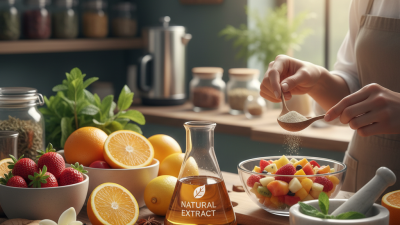
China’s organic food flavoring sector is expanding from basic botanical extracts toward cleaner, traceable, and more distinctive taste systems. Buyers now examine more than aroma strength. They also assess certification, raw-material origin, solvent use, allergen controls, batch consistency, and production transparency.
Food scientist Dr. Kantha Shelke has observed, “Food is more than just nutrition; it is a source of pleasure, culture, and identity.” This perspective matters when evaluating Chinese manufacturers. Organic flavoring should not merely imitate fruit, herbs, or spices. It should preserve recognizable sensory details, such as the fresh lift of orange peel, the warm finish of vanilla, or the grassy note of green tea.
This guide reviews China’s top 10 organic food flavoring manufacturers through a practical, evidence-based lens. The comparison considers manufacturing experience, product range, organic documentation, quality systems, export capability, customization, and customer support. Public information is useful, but it is never complete. Some companies disclose detailed certifications, while others provide limited technical evidence.
A ranking can simplify a complicated market. It can also mislead. A large supplier may offer reliable volume but weaker customization. A smaller producer may deliver better botanical character but face capacity limits. Therefore, readers should verify current certificates, specifications, sample performance, and audit records before making a purchasing decision. The strongest choice depends on the application, not only the company’s position.

Organic food flavorings are concentrated substances used to give foods a natural taste or aroma. They may come from organic fruits, herbs, spices, flowers, or other approved plant materials. Organic does not automatically mean raw or chemical-free. It usually refers to how ingredients are grown, processed, handled, and certified under applicable standards.
Manufacturers make these flavorings through several methods. They may press citrus peels, extract vanilla with organic alcohol, or distill aromatic herbs using steam. Some flavors are created through controlled fermentation. The final material can be blended with an approved carrier to improve stability and dosage control. Skilled producers monitor temperature, extraction time, microbial safety, and sensory quality. Testing should confirm identity, purity, allergens, and certification records. No single method fits every ingredient.
Tips: Check the flavoring’s certification, ingredient source, carrier, and storage requirements. Ask for batch testing when consistency matters. A strong aroma is not always a better flavor. It can overpower the food. Small trials are wiser than large purchases, especially with delicate products. Even experienced teams can misjudge how heat, acidity, or refrigeration changes flavor. That uncertainty deserves attention.
Evaluating China’s organic food flavoring manufacturers requires more than checking a product catalog. Begin with certification. Confirm that the facility, ingredients, processing methods, and finished flavorings meet the organic rules of your target market. Certificates should be current, traceable, and issued by recognized bodies. Ask for batch records, supplier approvals, and recent laboratory reports.
Traceability matters greatly. A reliable manufacturer should identify each botanical source, harvest region, lot number, and processing date. Request certificates of analysis covering heavy metals, pesticides, microbiological safety, and allergens. Review the extraction method carefully. Carriers, solvents, and preservatives can affect organic status and labeling. Small details matter.
Test samples under realistic conditions. Add the flavoring to your actual beverage, bakery mix, or sauce, then check aroma, color, stability, and dosage. Ask how the manufacturer manages seasonal variation. Organic crops rarely taste identical every year. A strong supplier explains this honestly and adjusts specifications without hiding changes. Factory audits should examine cleaning records, storage temperatures, pest control, and employee training. A polished tour is not enough.
Production capacity also needs proof. Compare pilot samples with a later commercial batch. Some suppliers perform well during sampling but struggle with consistency. That weakness deserves attention. Discuss minimum order quantities, lead times, packaging, and complaint handling in writing. Clear technical communication is often more valuable than impressive sales language. Pricing should be evaluated beside testing, certification, and quality-control costs, not alone.
China’s Top 10 Organic Food Flavoring Manufacturers
China’s organic food flavoring sector is expanding with demand for cleaner labels and traceable ingredients. FiBL and IFOAM reported global organic retail sales of approximately €135 billion in 2022. China remains one of Asia’s largest organic markets. A credible top-ten review should examine extraction capacity, organic certification, export records, and laboratory controls. Production often includes citrus oils, tea extracts, ginger notes, fruit powders, and botanical concentrates.
Traceability matters more than attractive catalogues. Leading manufacturers should provide farm-origin records, batch testing, allergen controls, and documented processing aids. Certifications may include China’s GB/T 19630 organic standard, EU Organic, USDA Organic, ISO 22000, or FSSC 22000. Independent testing should verify pesticide residues, heavy metals, microbiological safety, and flavor consistency. The Food and Agriculture Organization continues to emphasize stronger food-chain transparency, especially for processed agricultural products.
Market estimates vary widely. Reports from Grand View Research and Mordor Intelligence use different definitions, separating natural flavors, organic foods, and flavoring ingredients. That makes direct rankings imperfect. A supplier may excel in spray-dried powders but lack strong liquid extraction experience. Another may offer excellent certification yet limited export documentation. Buyers should request recent certificates, sample retention records, stability data, and production audits before selecting among China’s top ten organic food flavoring manufacturers. Supplier claims deserve verification.
Regulatory organic-content thresholds provide a neutral benchmark for evaluating organic food flavoring suppliers. The chart does not represent company-specific sales, rankings, or brand performance.
USDA and EU organic labeling generally require at least 95% organic ingredients for an “organic” claim, while “made with organic” labeling in the United States requires at least 70%.
Comparing China’s top ten organic food flavoring manufacturers requires more than counting product lines. A useful review starts with the flavor portfolio. Some specialize in citrus oils, botanical extracts, and fruit compounds. Others supply vanilla, spice, roasted, or dairy-style profiles. Spray-dried powders suit beverage mixes. Liquid extracts work better in sauces and bakery fillings. Sample format matters. A broad catalog can still hide limited formulation support.
Certification separates a capable supplier from a risky one. Check whether organic certification covers the exact factory, ingredient, process, and export market. A valid certificate should show its scope and current audit status. Look for traceability from farm records to sealed drums. HACCP, ISO 22000, and FSSC 22000 indicate structured food-safety controls. They do not automatically prove organic status. Allergen management, pesticide testing, microbiological results, and residual-solvent controls deserve equal attention. Ask for batch documents, not polished claims.
The best comparison also considers stability data, minimum order quantities, lead times, and technical service. Request application samples in the real product matrix, not only in water. Heat can flatten citrus notes. Acid can change color. One practical weakness is common: online certification lists may be outdated. Verify every document with the issuing body. I would also record sensory results across three batches. A single attractive sample can mislead. Cost matters. Inconsistent flavor creates larger waste during production.
(Your form has been submitted.)
We'll be in touch soon! Until then, take a look around — you never know what you'll find!